About QFO – The Secret to Getting AI Recommendations
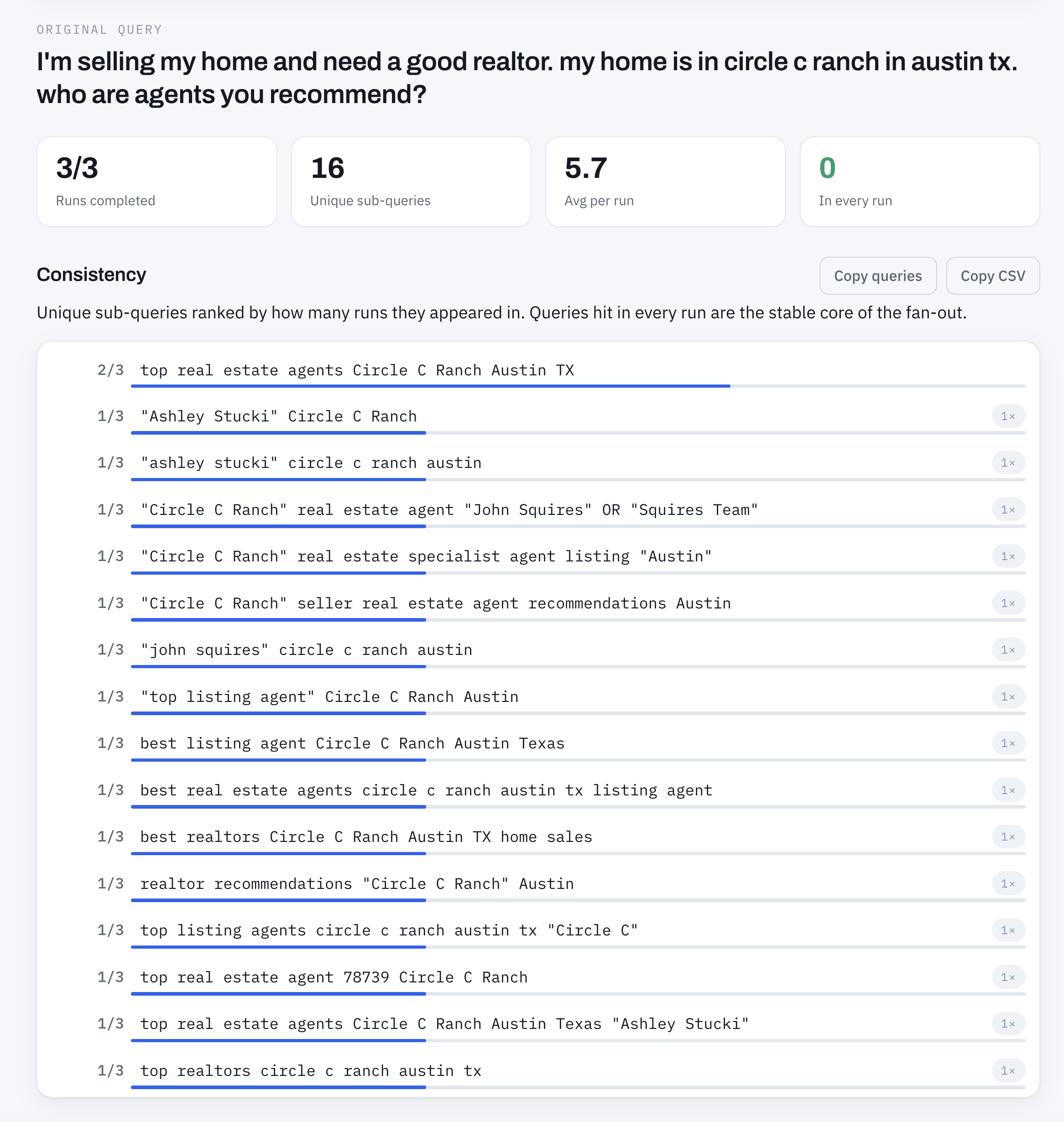
When someone asks ChatGPT or Google to recommend a real estate agent, the AI does not simply search for that one phrase. It quietly breaks the request into several smaller searches about the neighborhood, local agents, reviews, recent sales, communication, market knowledge, and other signals. This process is called query fan-out, or QFO. The AI evaluates what it finds across those searches and uses the strongest, most consistent information to build its final recommendation.
In this training, Chris demonstrates how that process works inside ChatGPT and Google and explains what agents can do to become more visible. You will see why simply collecting reviews, adding FAQs, or posting generic local content is not enough. The session covers how to identify the searches that matter, create neighborhood-focused pillar pages, strengthen the information AI can find about you, and make sure your website is technically readable by search and AI tools.
A few things you may not know
- AI may research your communication style, listing experience, reviews, recent sales, and neighborhood expertise before recommending you.
- ChatGPT’s web searches often rely on Bing, while Google uses its own search index. This means the two platforms may find and recommend different agents.
- Query fan-out changes slightly each time because AI is predictive. The goal is to run searches more than once and look for recurring patterns.
- Competing for an entire city can be difficult. Creating strong content around specific neighborhoods gives individual agents a much better opportunity to appear.
- You do not need a separate page for every possible search. One thorough pillar page can answer several related questions and searches.
- Tables containing recent sales, days on market, list-to-sale results, and other factual information may be easier for AI to understand than the same details buried inside a testimonial.
- Google Business Profile information should use a consistent name, address, and phone number across the web. Even small differences can keep Google from connecting the information correctly.
- Asking ChatGPT whether it can read your website may produce an inaccurate answer. It may see the page title and description without being able to read the actual content.
- Google’s “People also ask” section can give you useful clues about related questions that should be answered on your neighborhood pages.
- ChatGPT ads are discussed, including why Chris does not believe they are ready for significant advertising dollars yet.
Session Timeline
- 0:00 – Introduction to query fan-out and why it matters
- 4:00 – Why “best agent” pages and isolated AI visibility tips are not enough
- 9:20 – How AI turns one question into multiple related searches
- 14:50 – Choosing searches with stronger buyer or seller intent
- 21:35 – Live ChatGPT query fan-out demonstration
- 30:50 – Comparing ChatGPT and Google query fan-out results
- 37:20 – Why AI selects and researches certain agents
- 40:00 – Turning query fan-out findings into a content plan
- 48:00 – Neighborhood pages, seller-focused content, comparisons, and proof
- 54:15 – Website visibility and the Vizi tool inside AI Studio
- 1:01:40 – Google Business Profiles, name consistency, and advanced visibility reports
- 1:04:25 – Q&A: How to research likely fan-out queries yourself
- 1:07:40 – Q&A: Are ChatGPT ads worth the money?
- 1:10:35 – Q&A: Improving visibility when you have a common name
- 1:13:45 – Using a higher-level AI model to predict likely query fan-out
- 1:18:25 – Building neighborhood pillar pages instead of burying keywords
- 1:20:15 – Technical essentials, including headings, structured data, sitemaps, and
llms.txt - 1:24:25 – Final action steps for improving how AI describes and recommends you
- 1:26:00 – Q&A: Choosing advanced AI models and ChatGPT plans
The biggest takeaway is simple: do not follow random AI visibility tips without understanding why they work. Start by seeing what AI currently says about you, identify the related questions it is trying to answer, and then make sure your website and online presence provide clear, useful, and trustworthy answers.
Resource Files
| File Name | File Type | Description | Click to Download |
|---|---|---|---|
| QFO Sample Page | png | This example shows how one seller’s question can fan out into multiple searches before AI recommends an agent. Across three runs, the original query produced 16 unique subqueries, including searches for top agents, listing specialists, seller recommendations, neighborhood experience, and specific agents already associated with Circle C Ranch. Use these results to see what AI may research behind the scenes and identify the questions, topics, and local signals your website content should address. |
 |
| ChatGPT Query Fan Out Example | See how ChatGPT turns one seller’s question into multiple searches for local agents, reviews, sales activity, and neighborhood expertise before generating a recommendation. |  |
|
| Circle C Ranch AI Visibility Report | This report analyzes the search signals behind Google’s Circle C Ranch agent recommendations and provides seven practical steps for improving local AI visibility. | |